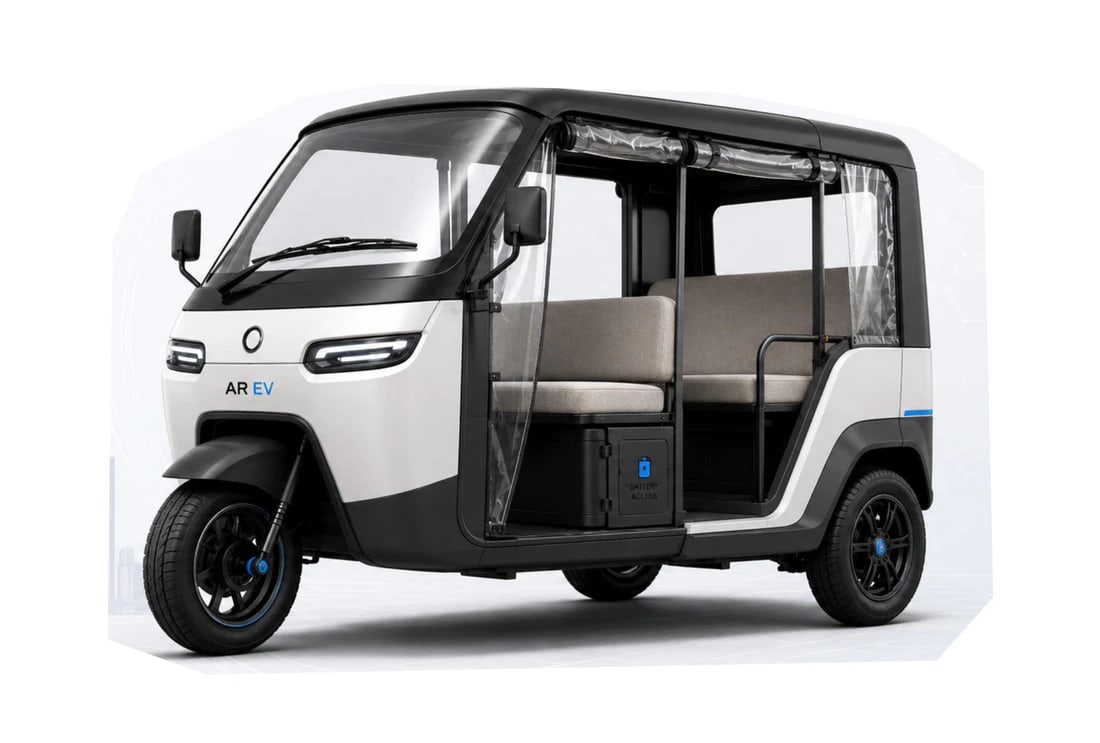
Design 0101
Urban Comfort
Friendly passenger layout
Easy entry · front + rear benches · side-swap batteries · rain drapes · modular panels
Electric mobility ecosystem
A vehicle, a retrofit path and the energy backbone that keeps fleets moving.
Three connected products for practical electric mobility: the AR EV Tuk-Tuk, an electric conversion kit for existing vehicles, and a modular battery-swap and mobility-hub platform.
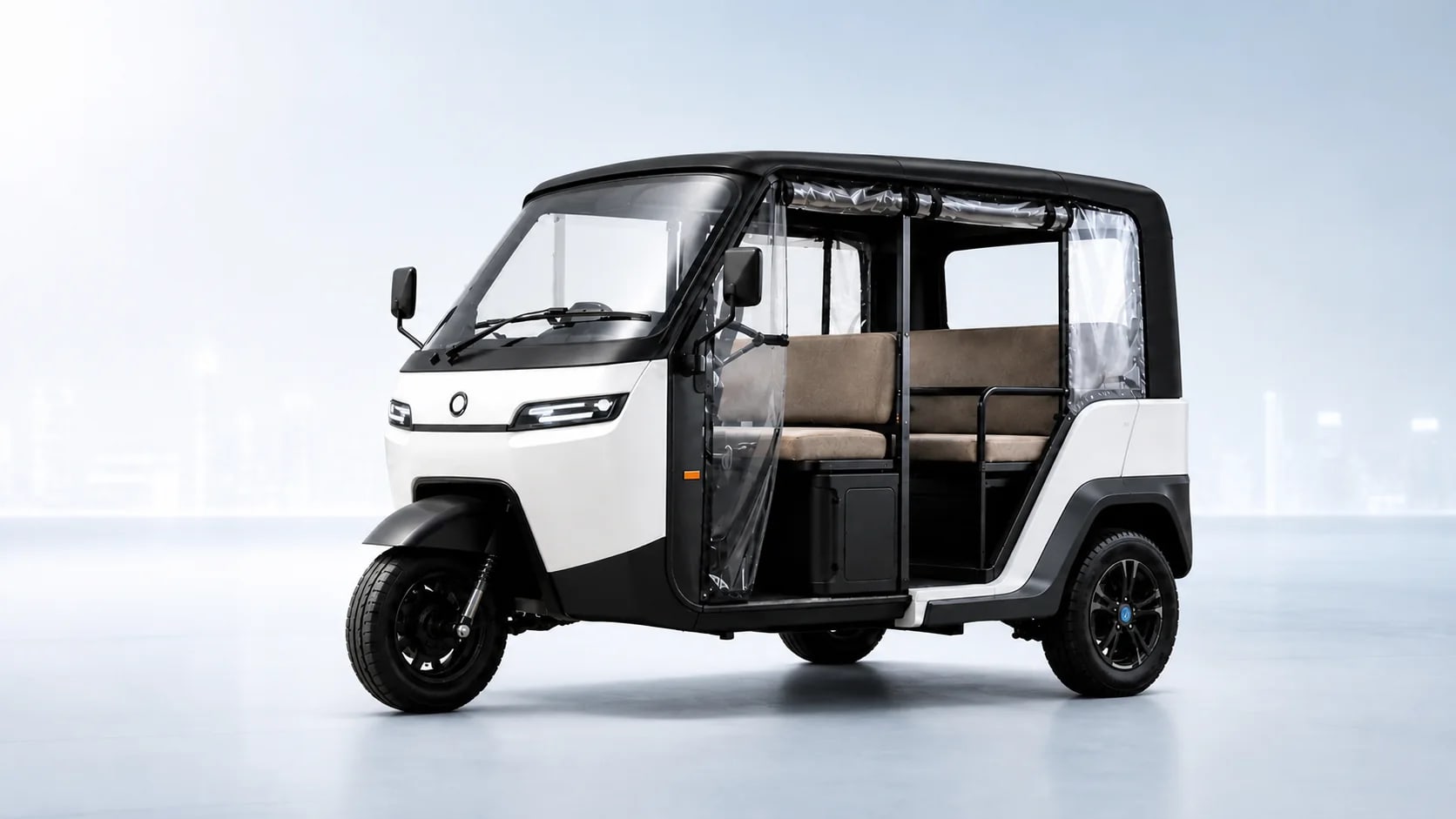
Product visual from the Thuanki AR EV concept platform
Three-product architecture
Common-platform vehicle family
Each design changes the cabin or duty emphasis without changing the core AR EV platform logic. That preserves common parts, local buildability, accessible service and the side-swap battery architecture.
Friendly passenger layout
Easy entry · front + rear benches · side-swap batteries · rain drapes · modular panels
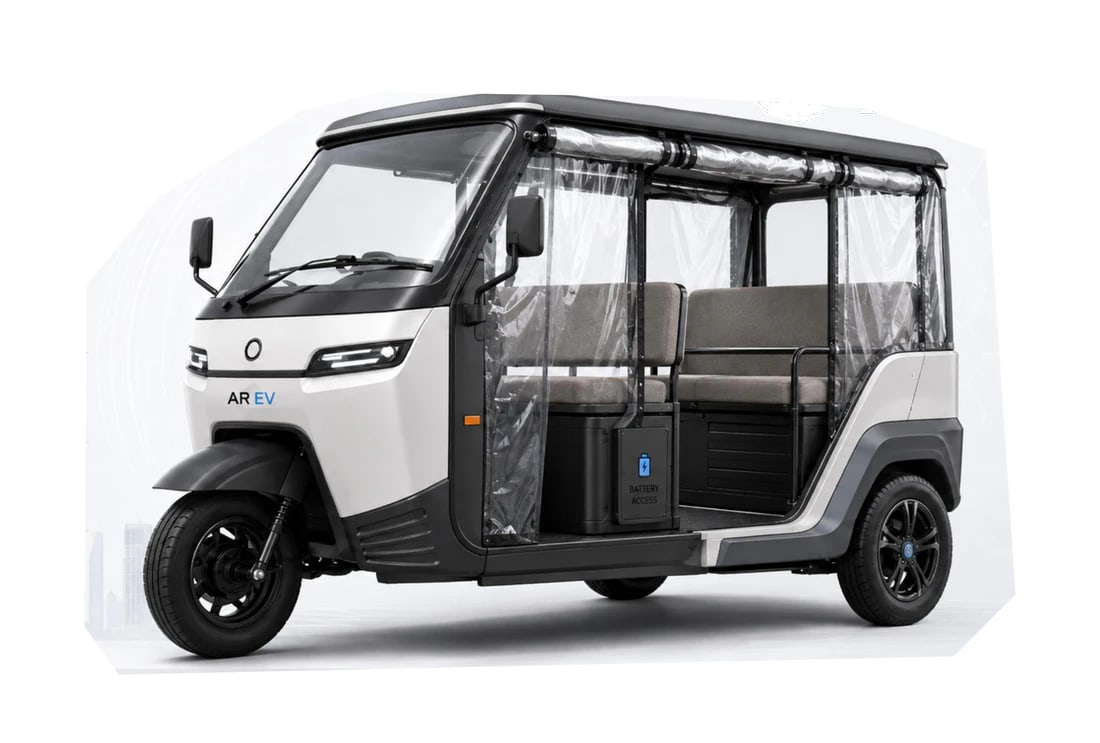
Enhanced all-weather comfort
Insulated roof · roll-down clear drapes · side-swap access · easy-clean surfaces · repairable panels
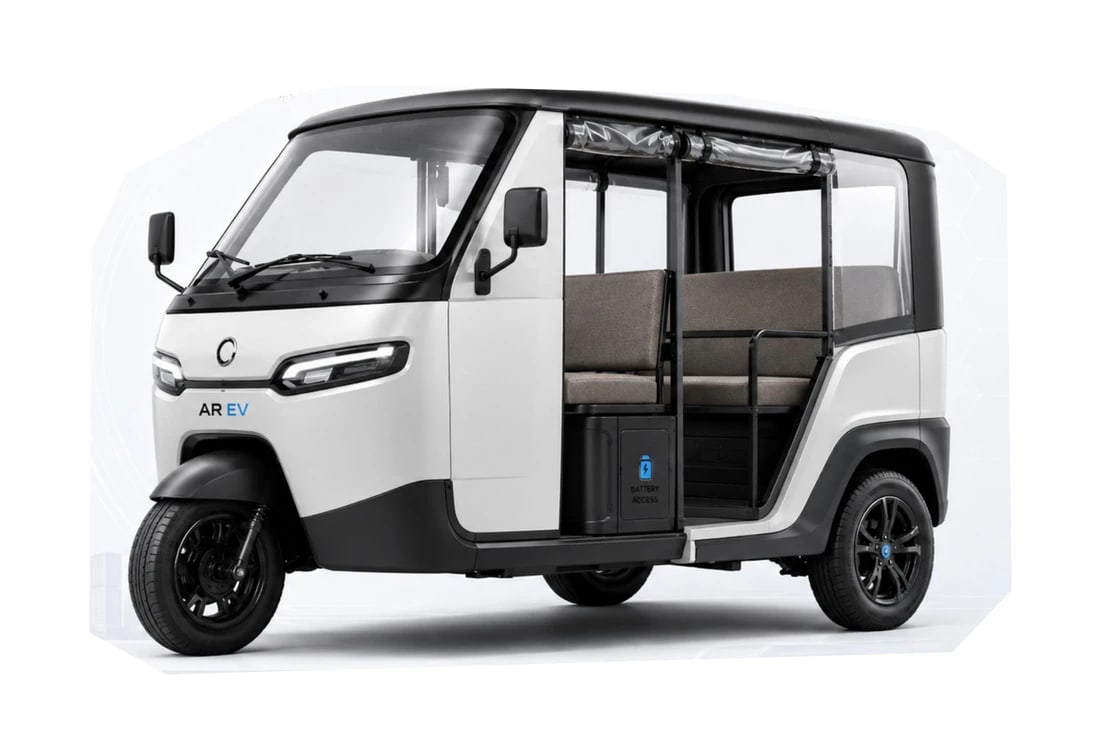
Refined enclosed urban form
Front + rear bench seating · wide side opening · side-swap bay · weather drapes · low-maintenance panels
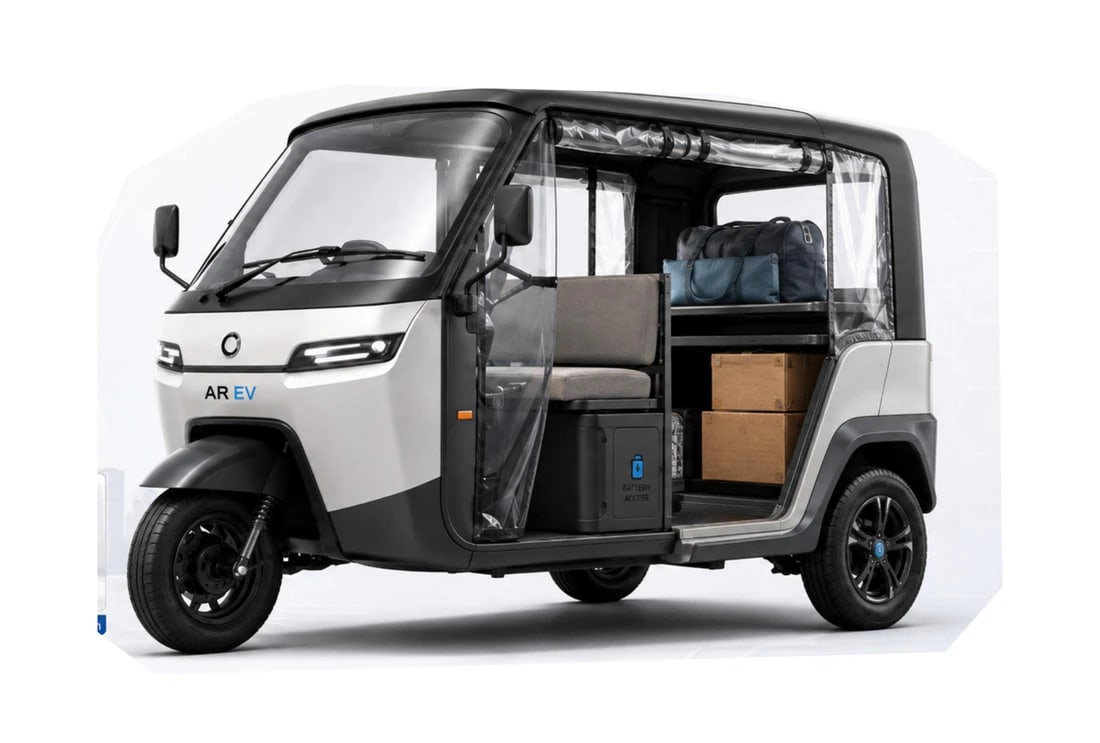
Passenger and luggage duty
Luggage shelf · wide side access · rain drapes · side-swap battery · common platform
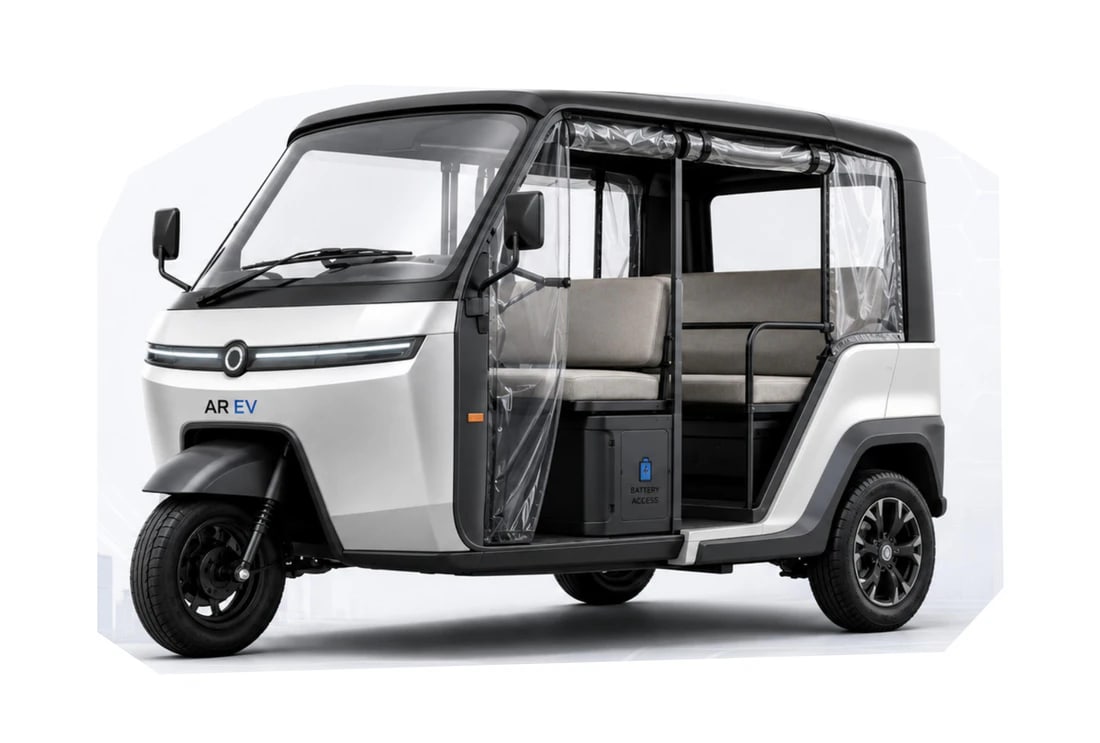
Sharper identity, same platform
Refined lighting · flat-sheet construction · easy access · shared service parts · cohesive family design
A modular rear e-drive, battery, control and mounting path for suitable donor vehicles.
Driver access, cabinet safety, charged inventory and battery-health verification in one sequence.
Vehicle status, battery state, swap activity, service evidence and operating visibility.
A modular, human-centered electric mobility platform
Designed around daily passenger use, local serviceability and modular assembly. The cabin combines front and rear bench seating with a wide side opening, low step-in access, a flat floor and weather protection.
System configuration
Concept platformEasy entry, practical seating, weather protection and passenger usability shape the cabin.
Flat panels, accessible modules and common hard points reduce service complexity.
A common low-chassis architecture supports multiple vehicle and body configurations.
A practical electric retrofit for existing passenger tuk-tuks
The conversion route retains the familiar body, chassis and passenger cabin while replacing the combustion powertrain with a modular electric system designed for clean integration and workshop-friendly service.
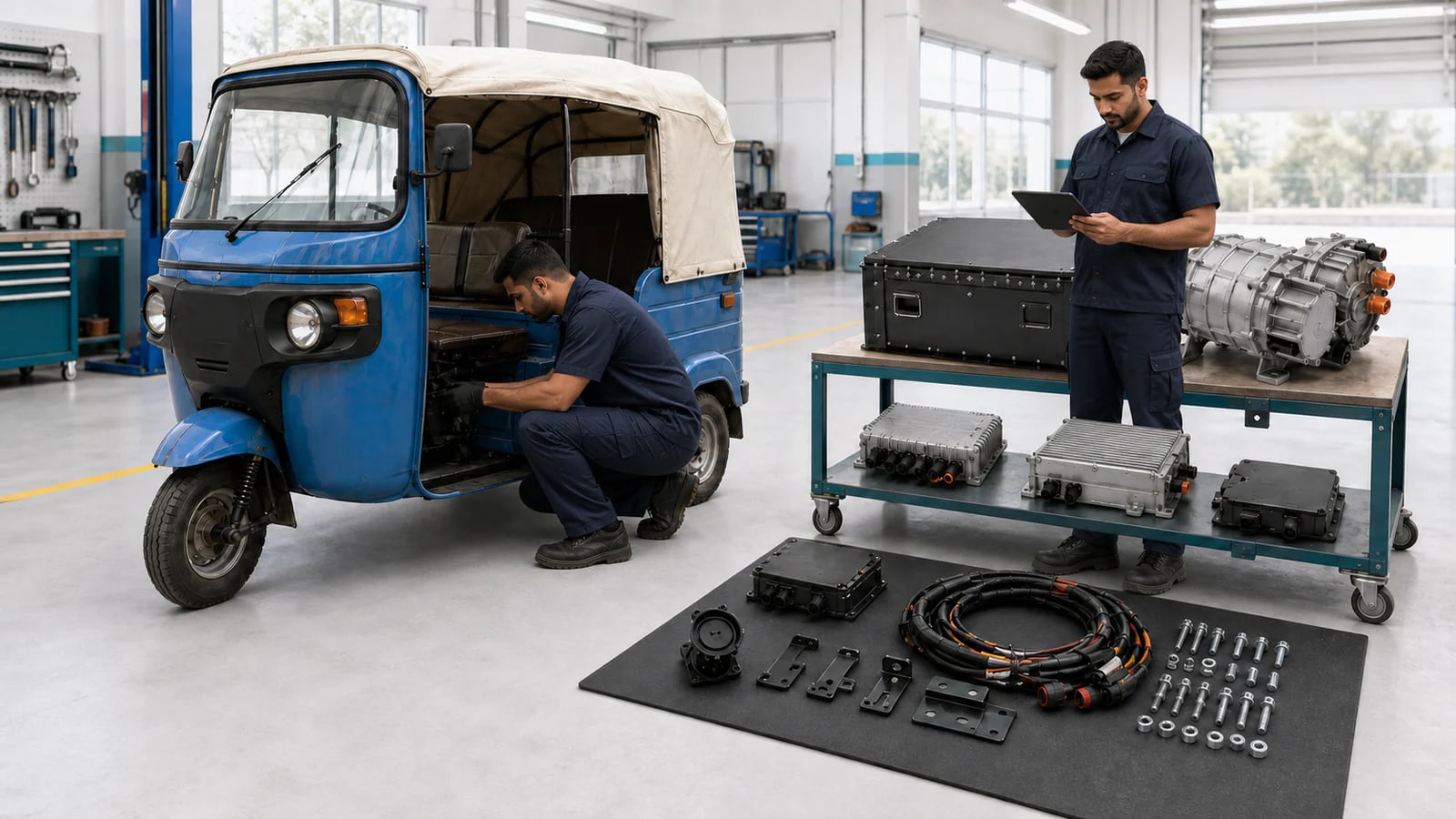
System configuration
Concept platformThe fleet-energy layer behind high-uptime electric mobility
A modular cabinet and operations layer for charging, monitoring and exchanging fleet batteries. The concept connects swap hardware, FlexPower energy supply, battery intelligence and partner operations into one scalable hub.
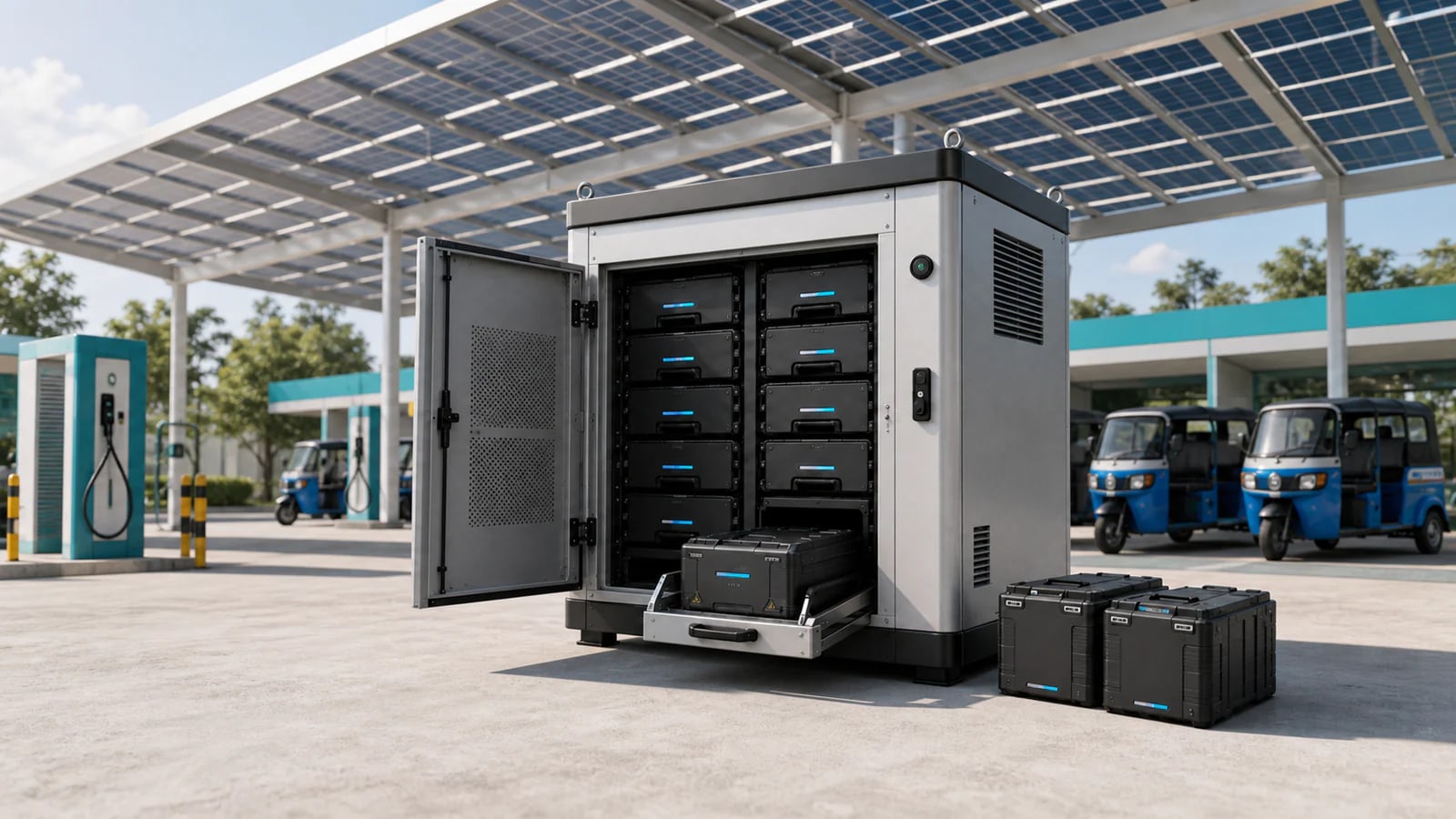
System configuration
Concept platformCabinet mechanics, battery status, driver access and fleet records work as one operating sequence.
From energy source to fleet movement
Solar, grid or generator feeds the FlexPower energy system.
Battery modules are charged, tracked and held ready.
Charged modules move to the swap cabinet and vehicles return to service.
Fleet, battery and service data support day-to-day decisions.
AR EV materials present a Thuanki concept platform and product architecture. Vehicle, battery, cabinet, timing, capacity and deployment details remain subject to validation, approved configuration, local regulation and field engineering.